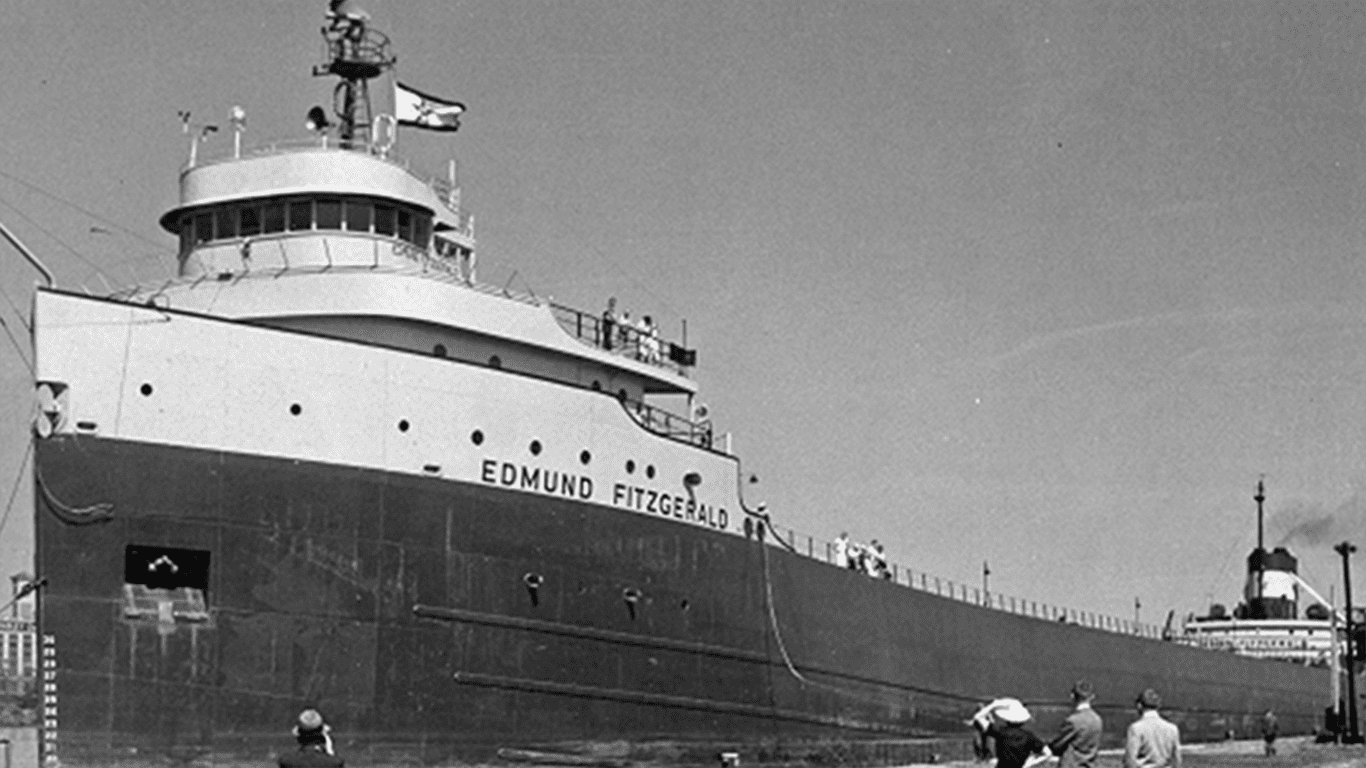
The Edmund Fitzgerald carried taconite iron ore from Duluth, Minn., to iron works near several Great Lakes ports. She sank during a Lake Superior storm on Nov. 10, 1975, with the loss of the entire crew of 29. Great Lakes Marine Collection – MPL/WMHS
We Preserve and Share
Great Lakes Marine History
The Wisconsin Marine Historical Society is a passionate and dedicated non-profit organization committed to preserving the rich history of the Great Lakes. With a membership of 150 individuals, we are proud to be affiliated with the esteemed Milwaukee Public Library.
Uncover Hidden Treasures
The Wisconsin Marine Historical Society boasts an extensive and diverse collection that encapsulates the true essence of Great Lakes marine history. From the early settlers and fur traders to the bustling steamships and iconic lighthouses, each artifact tells a unique story waiting to be unlocked. Immerse yourself in the beauty, magnificence, and hardships of our maritime past.
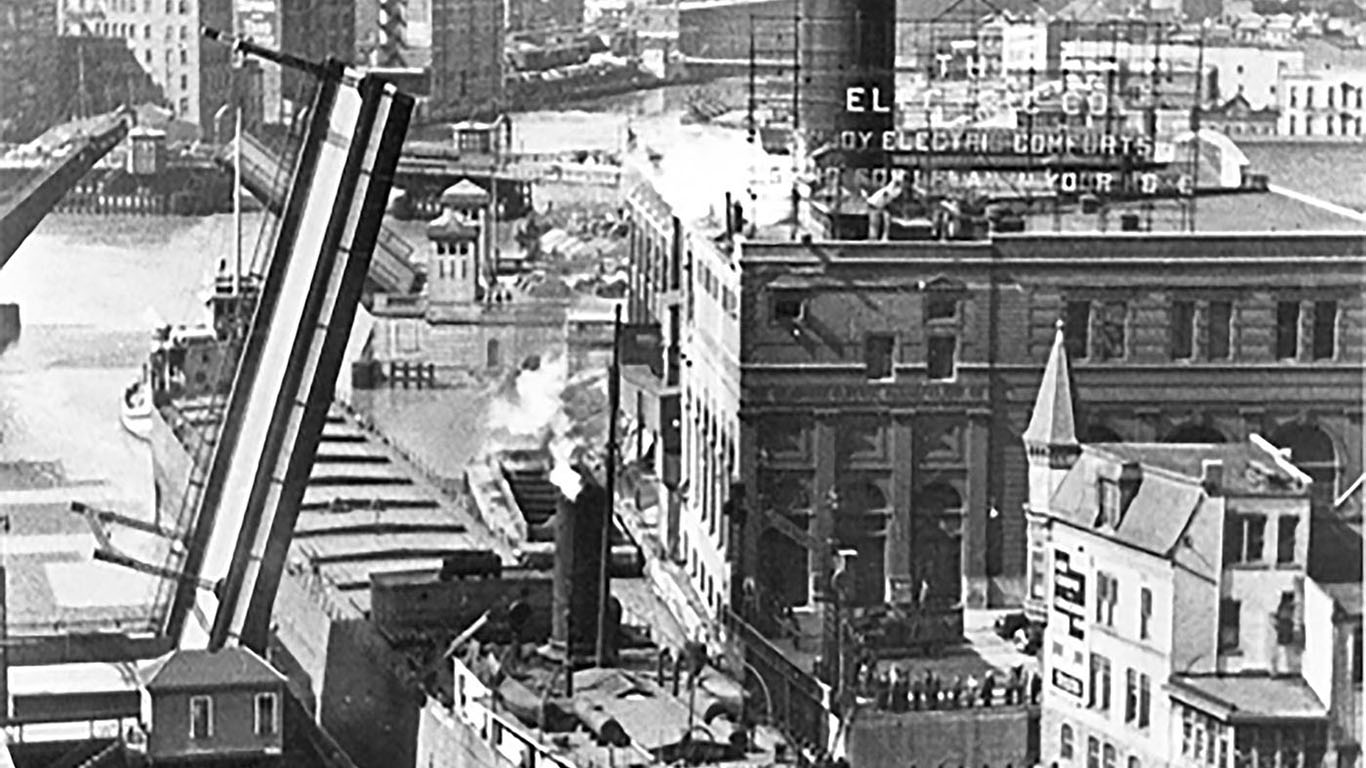
The Angeline making her way under the Wells Street bridge of the Milwaukee River.
Great Lakes Marine Collection – MPL/WMHS
November 10, 1975
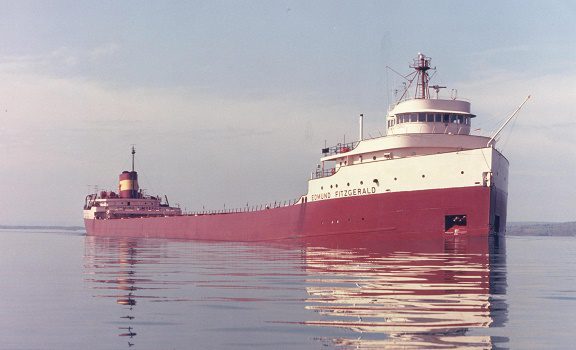
November 10, 1975. The day the EDMUND FITZGERALD was lost along with her captain and crew. One of those historic moments where you will always remember what you were doing when you heard the news.
The EDMUND FITZGERALD was built by the Great Lakes Engineering Works at River Rouge, Michigan, and launched on June 7, 1958. The “Big Fitz” was christened by Elizabeth Bacon Fitzgerald, wife of the ships namesake. Over 10,000 people were there for the launching and over 900 workers were involved with the construction which cost $8.4 million. The FITZ was the largest ship ever to be launched sideways.
Continue reading here

Once There Were Many, Now There are None
By James Heinz
There is an old saying in the shipping business: “The ship doesn’t make any money while it is tied to the dock.” The bulk carriers of the Great Lakes could be loaded with iron ore quickly by using the oldest machine mankind has ever used to move things: Gravity.
That left the problem of how to get the ore out of the ship’s hold. Originally ships were unloaded by men who shoveled the ore into wheelbarrows. It took five days to unload 400 tons by hand. Meanwhile the ship wasn’t making any money tied to the dock. A better solution was supplied by engineer George Hulett, who saw how long it took to unload ships in his home city of Ashtabula, Ohio. His solution: The Hulett unloader.
They were huge machines that looked like monsters from a sci-fi movie. To describe exactly how they worked would take half a page. Their size and operation can best be understood by viewing the attached photos and diagram and by viewing videos of them in operation on You Tube.
About 80 Huletts were built between 1898 and 1954. Almost all were used on the Great Lakes except one in New York City that unloaded garbage. Most were built on Lakes Erie and Michigan. They grew in capacity from 10 to 20 tons and could unload as much as 1,000 tons an hour. The Huletts made it feasible and economical for Great Lakes shippers to builder bigger and bigger bulk carriers and for the steel industry to greatly increase production.
They weighed as much as 1,500 tons. At first powered by steam, they eventually used electricity. They drew so much electricity that when they were in use, they caused the lights in town to dim, and each dock required its own electrical power plant.
Starting in the 1980s the Huletts began to be replaced by self-unloading rigs carried on the ships themselves. This reduced the ship’s total cargo capacity. A ship that had previously taken 18-24 hours to unload using a Hulett unloader could be unloaded in six hours. The quicker turnaround time more than made up for the reduced load. No longer did the ship not make money while tied to the dock. It also enabled ships to unload in any port, whether it had Hulett unloaders or not.
The last Hulett unloaded its last cargo on December 15, 1992, at Whiskey Island in Cleveland. Ohio. The last two Hulett’s at Whiskey Island lingered disassembled for several years due to efforts to preserve them as monuments of industrial engineering but in 2024 Port Cleveland decided to sell them for scrap.
Once there were many, now there are none.
Discover the rich marine history of the Great Lakes.
Officers 2025
- President: Todd Gordon
- Vice President: Christopher Winters
- Secretary: Janyce T. Hetzel
- Treasurer: Nancy Carpenter
- Executive Director: Suzette J. Lopez
- Past President: Carl Eisenberg
- Milwaukee Public Library Special Collections Coordinator: Kirsten Thompson
Newsletter
- Soundings Editor: Kathie Uttech Gordon
Events
November 16, 2026 - Treasurers of the Great Lakes - Milwaukee Public Library - 11:30 am - FREE - The Rest of the Story for the SS CHRISTOPHER COLUMBUS Part Two - 1900 – 1936 - Guest speaker Todd Gordon
Monday, November 16
The Rest of the Story for the SS CHRISTOPHER COLUMBUS Part Two – 1900 – 1936 – Guest speaker Todd Gordon
Hear the rest of the story for the SS CHRISTOPHER COLUMBUS a whaleback that was specifically built to shuttle passengers from downtown Chicago to the 1893 Chicago World’s Fair.
November 18, 2026 - Annual Christmas Tree Ship Holiday Dinner at the Milwaukee Yacht
to be announced.
November, 2026 - No Book Club this month
Email wmhs59@gmail.com to register
No book club in November.
November 24, 2026 - Happy Thanksgiving Holiday to all
Thursday, November 24th
Happy Thanksgiving to all
December 16, 2026 - Book Club - 7 pm - ZOOM
Email wmhs59@gmail.com to register
to be announced
December 21, 2026 - Treasurers of the Great Lakes - Milwaukee Public Library - 11:30 am - FREE - Built in Wisconsin - A variety of vessels built in our home state
Monday, December 21
Treasures of the Great Lakes Series
Built in Wisconsin – A variety of vessels built in our home state.
Milwaukee, Manitowoc and Sturgeon Bay are known for shipbuilding, schooners were built in Depere, excursion boats in Oshkosh and whalebacks in Superior. Even 1,000 footers were built in Wisconsin. Wisconsin’s diverse history has contributed to Great Lakes shipping.